Skip to content
JoruJoru
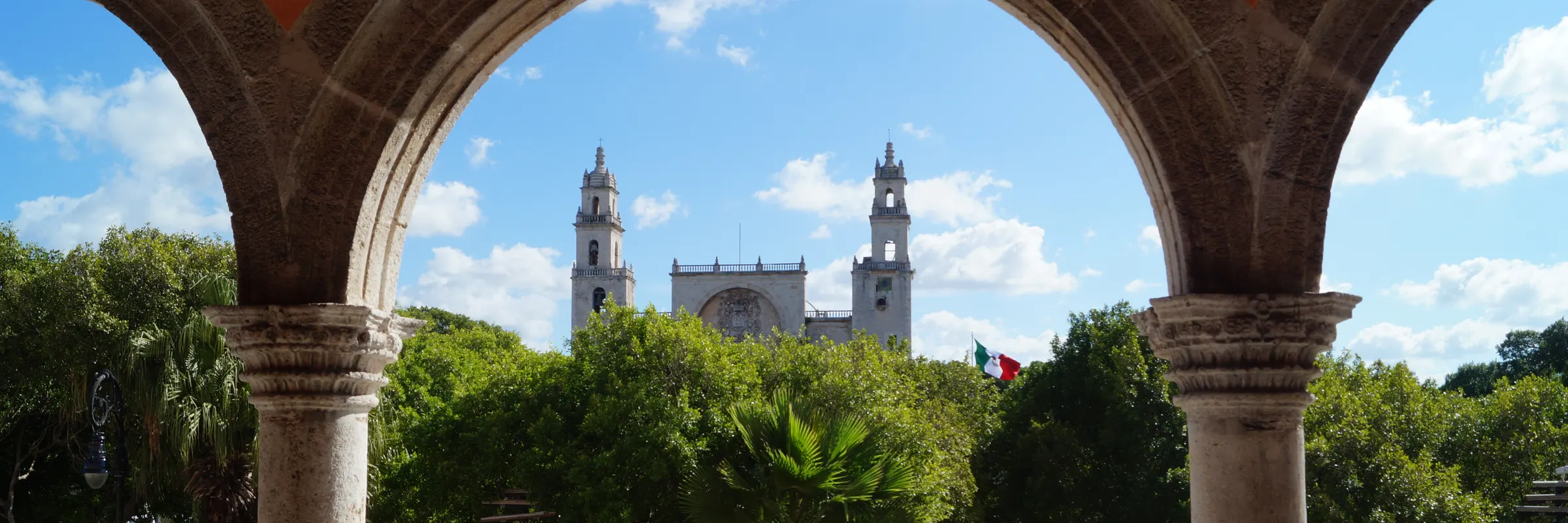
Mérida: The cathedral across the main square, from the arcade of the town hall
Photo: https://www.flickr.com/photos/niek_van_son/ · CC BY 2.0
Yucatán, Mexico

Mérida: how many days you need and the best months to go

Mérida is not a beach town, and in spirit it is a long way from one: an inland colonial capital, built with the stones of a Maya city, where the pleasure is in the squares at night and the reason to stay is everything within two hours of it. Two things shape a visit. The first is the heat, which is serious all year and punishing in spring, and which pushes the day into the early morning and the evening. The second is that the famous places around it — Chichén Itzá, Uxmal, the cenotes, the flamingo lagoons — lie in different directions, so each is its own day and the order matters.

Short answers

What people ask before booking

How many days do you need in Mérida?

Mérida needs three days at a minimum — the city, one of the great Maya sites and a cenote — and five to see Uxmal, Chichén Itzá and the coast, which lie in different directions. Come between November and February; April and May are the hottest months of the year.

What is the best month to visit Mérida?

December to February — The least hot months, and mostly dry. November — The rains ending, and the days of the dead.

Which months are worth avoiding in Mérida?

April and May — The hottest weeks of the year.

Work out how many hours you will have in Mérida on your dates

How many days Mérida needs

The city itself takes a day and a half: the main square and its cathedral, the market, the avenue of mansions, a museum, and at least two evenings, because the evenings are the point. That is the part people underestimate, arriving late and leaving at dawn for the ruins.

Three days adds one big site and a swim in a cenote. Five lets you do it properly: Uxmal and Chichén Itzá are in opposite directions, and so are the coast and the cenotes, so each is a separate day out and back. Mérida works best as a base you return to every evening, not as a stop on a loop.

How the city is arranged, and how the street numbers work

The centre is a grid of one-storey colonial houses around the main square, ringed by old neighbourhoods that each grew around their own church and small park. A wide avenue of mansions, built with the fortune the region made from rope fibre a century ago, runs north from the edge of the centre, and beyond it the modern city spreads for miles.

The streets have numbers, not names: even numbers run north to south and odd numbers east to west. An address is given as a street and the two it lies between, so a restaurant is on 60, between 55 and 57. Once you have that you cannot get lost, and every taxi driver expects it.

  • The main square — the cathedral, the governor's palace with its murals, and the house of the conquistador's family, on the site of the Maya city whose stones built them.
  • Santa Lucía and Santa Ana — the blocks north of the square: small parks, the theatre, galleries and most of the restaurants a visitor will use.
  • Santiago — the old neighbourhood to the west, with its own market and park: residential, quieter, and full of restored houses.
  • Paseo de Montejo — the avenue of mansions, with the anthropology museum in one of them, cafés under the trees and the larger hotels.
  • The north — the modern city: shopping centres, hospitals, the big Maya museum and the road to the coast. Nothing here is walkable.

Where to stay, and what each area costs you

Stay in the centre or beside the avenue. The colonial houses are the best rooms in the city — high ceilings, tiled floors, a courtyard and often a small pool — and many small hotels are exactly that. A pool is not a luxury here: in the hot months it is how the middle of the day is spent.

The trade-off inside the centre is noise. The even-numbered streets carry the buses, the houses open straight onto narrow pavements, and old windows do not seal. Ask for a room at the back, and check that the air conditioning is in the bedroom and not only in the hall.

AreaWho it suitsThe catch
Around the main squareA first visit. The cathedral, the market and the free evening events are on foot, and rooms cost less than further north.Bus traffic and noise through the day, and the blocks south of the square are scruffy at night.
Santa Lucía and Santa AnaThe best restaurants and bars at the door, pretty small parks, and a flat walk to both the square and the avenue.The most sought-after blocks in the centre: prices are higher, and the music carries late on event nights.
SantiagoQuiet residential streets, a neighbourhood market and restored houses with pools, ten minutes on foot from the square.Few restaurants open at night, and a walk back along dim streets.
Paseo de MontejoLarger hotels with pools and parking, a shaded avenue for the evening walk, and easy road access for day trips.A long, hot walk or a short taxi to the main square, and less of the old city's character.
The north of the cityModern chain hotels near the shopping centres and the road to the coast, at business prices.A taxi ride from everything you came to see. A base for a car, not for a visit.

Compare these areas against your priorities

The airport, the buses and getting out of the city

The airport is small and close, a short taxi ride south-west of the centre. Many visitors arrive instead by first-class bus from Cancún, which has far more international flights: the journey takes about four hours, and some buses leave from Cancún airport itself. The first-class bus station in Mérida is a few blocks from the main square.

Inside the centre you walk, early and late; beyond it, taxis and ride-hailing apps are cheap. The sites are the question: tours and buses reach the big ones, a hire car reaches everything, and the roads are flat, straight and easy to drive.

  • The railway station is not in the city. The long-distance tourist train stops well outside Mérida to the east, with a connecting bus to the centre, and there are only a few trains a day. Check the timetable before planning around one.
  • Second-class buses and shared vans leave from separate small terminals, one for each direction, scattered through the blocks south of the square. Ask your hotel which one serves your village.
  • Do not drink the tap water. Ice in restaurants is made from purified water.
  • Carry cash for the countryside. Cenotes, village restaurants and site car parks rarely take cards, and many cenotes are run by the community that owns the land.

Ruins, cenotes and the coast

Everything below is between half an hour and two hours from the city, and no two are on the same road. The choice that matters is between the two great Maya sites. Chichén Itzá is the famous one and the most crowded place in the peninsula, filled by late morning with coaches from the Caribbean resorts. Uxmal is closer, quieter and, to many eyes, the finer architecture.

  • Uxmal — a Maya city of long, carved stone façades and a pyramid with rounded corners, an hour or so to the south. Smaller sites along the same road can fill the rest of the day.
  • Chichén Itzá — the stepped pyramid, the ball court and the sacred well, about two hours to the east. Be at the gate when it opens: by eleven the site is full, and there is no shade.
  • Cenotes — sinkholes in the limestone, open to the sky or inside caves, filled with clear, cool groundwater. The peninsula has no rivers on its surface; this is where the water is. Several villages south-east of the city have a cluster each. Shower first and wear no sunscreen.
  • Celestún — a lagoon on the Gulf coast to the west where flamingos feed, seen from a small boat. Numbers are highest in the winter months.
  • Progreso — the nearest beach, half an hour to the north: a working port with a very long pier, a seafront of fish restaurants, and the whole of Mérida on a summer Sunday.

How eating works here

Yucatecan food is a cuisine of its own, not a regional accent of Mexican cooking: sour orange instead of lime, a red paste of annatto seed, meat cooked in a pit, turkey, and a habanero sauce that is always served on the side. Heat is something you add yourself, a few drops at a time.

The timetable follows the climate. The main meal is in the early afternoon, and the best traditional kitchens serve only then. Markets are for breakfast and lunch and wind down by mid-afternoon. In the evening the squares fill with carts, and on Sundays the centre is closed to cars and becomes a single open-air food market.

  • The slow-roasted dishes are morning food. Pit-cooked pork is sold from early on Sunday and is gone by midday; ordering it for dinner means eating something reheated.
  • Taste the habanero sauce before you pour it. It is among the hottest chillies in ordinary use, and the bowl on the table is not decoration.
  • Tipping is expected in restaurants, a tenth of the bill or a little more. Not at market counters.

Where to eat in Mérida, and what to order

The cooking of the Yucatán is Maya at its base, with Spanish, Caribbean and Lebanese layers on top, and it tastes like nowhere else in Mexico. The best of it is at lunch, in plain family restaurants and at market counters, and much of it is tied to a day of the week.

  • Cochinita pibil

    What to order

    The dish the region is known for

    Pork rubbed with a red paste of annatto and sour orange, wrapped in banana leaves and cooked for hours in a pit until it falls apart, then eaten in tacos or a bread roll with pickled red onion. It is traditionally Sunday-morning food, bought by weight from stands that sell out by noon. Go early, and add the habanero with care.

    Check it on Wikidata
  • Sopa de lima

    What to order

    A soup that works in the heat

    A clear turkey or chicken broth soured with the juice of a local lime, with shredded meat and strips of fried tortilla dropped in at the table so they stay crisp. The lime is a regional variety, fragrant and less sharp than the ordinary kind, which is why the soup tastes different anywhere else. It is a first course at lunch, and often the lightest thing on the menu.

    Check it on Wikidata
  • Panucho

    What to order

    The everyday snack, from a market counter

    A small tortilla split and filled with a layer of black beans, fried, and topped with shredded turkey or pork, lettuce, avocado and pickled onion. Its sister is the same thing without the beans, puffed in the oil until it is soft and light; counters sell both, and people order a mix. They are market and evening food, eaten three or four to a plate.

    Check it on Wikidata
  • Poc chuc

    What to order

    Grilled pork, the Maya way

    Thin slices of pork marinated in sour orange and salt, grilled over charcoal and served with roasted tomato sauce, pickled onion, black beans and tortillas. It began as a way of cooking salted meat before refrigeration, and the sour orange is what makes it Yucatecan. A simple plate, and a good test of a kitchen.

    Check it on Wikidata
  • Papadzules

    What to order

    A dish older than the Spanish

    Tortillas dipped in a green sauce of ground pumpkin seeds, rolled around chopped hard-boiled egg and covered with tomato sauce. It has no meat and no chilli heat, and it is usually counted among the oldest dishes of the peninsula. It comes lukewarm, as a starter: mild, nutty and unlike anything else on the table.

    Check it on Wikidata
  • Marquesita

    What to order

    Something sweet from a cart, after dark

    A thin batter cooked in a round iron until crisp and rolled into a tube around grated Dutch cheese, with caramel or chocolate if you ask. It was invented in Mérida, and the cheese is not a mistake: the red ball of Edam has been part of Yucatecan cooking since the port traded directly with Europe. The carts appear in the squares at dusk.

    Check it on Wikidata

When to go, and what each month costs you

Mérida is hot in every month: even in January the afternoons are properly warm. What changes is how hot, and whether it rains. The dry season runs from November to April and the rains from June to October, falling mostly as afternoon storms. The two months before the rain, April and May, are the hottest of the year.

  • December to February

    Go now

    The least hot months, and mostly dry

    Warm days, nights mild enough for a light layer, and little rain. Now and then a north wind brings a grey, fresher day or two. January is the city's anniversary month: it was founded on the sixth, a fixed date, and weeks of free concerts follow. Christmas and New Year fill the hotels with Mexican families.

  • November

    Go now

    The rains ending, and the days of the dead

    The storms thin out, the countryside is green and the heat eases to its winter level. The turn of October into November is the Maya version of the Day of the Dead, on fixed dates, with altars in the squares and, a few days earlier, a night-time procession from the main cemetery; rooms fill for those days. The rest of the month is quiet and good.

  • March

    Worth it, but

    Dry, and heating up week by week

    Still dry, with the temperature climbing. On and around the spring equinox, about the twentieth, crowds gather at Chichén Itzá to watch the shadow move down the pyramid's stair. Holy Week moves between March and April, and Mérida empties towards the coast, which is then full.

  • June to August

    Worth it, but

    Hot and humid, with afternoon storms

    Rain on more than half the days, usually a heavy downpour late in the afternoon that cools the air for an hour. Mornings are for the sites, and the cenotes are at their best when the day is at its worst. Mexican school holidays in July and August keep the beaches and the big ruins busy.

  • September and October

    Worth it, but

    Storm season, and the cheapest weeks

    Frequent storms, high humidity and the peak of the hurricane season in the Gulf and the Caribbean. Mérida is inland and direct hits are rare, but a storm anywhere in the region can cancel flights and flood roads. Prices are at their lowest and the sites are empty.

  • April and May

    Think twice

    The hottest weeks of the year

    The end of the dry season, before the rain breaks: afternoons that stop everything, hot nights, and a haze from fields being burned for planting. Sightseeing shrinks to the first hours of the morning. If these are your only dates, book a pool, start at dawn and write off the hours from noon to five.

What to pack for Mérida, month by month

Things that change the trip

  • Split the day in two. Sites and walking before eleven, a long lunch and the pool through the afternoon, the squares after dark. It is how the city itself lives.
  • Learn the address system on the first morning: a street number and the two cross streets. Give it to drivers in that form.
  • Choose Uxmal or Chichén Itzá first, and be at the gate at opening. If you do both, do them on separate days.
  • Ask what is on tonight. There is free music or dancing in one of the squares on most evenings, and the Thursday serenade in Santa Lucía has run since the 1960s.
  • Carry water, a hat and cash on every day trip. The sites have little shade, and the village cenotes take no cards.
  • Keep Sunday for the city. The centre is closed to traffic, the main square becomes a market, and in the morning the avenue is given over to bicycles.

Plan Mérida around the heat

A trip of more than three days, or one that adds Chichén Itzá, Campeche, Valladolid or the Caribbean coast and the roads between them, is what Premium is for. The free version covers one destination of up to three days.

Destinations