




Skip to content
JoruJoru
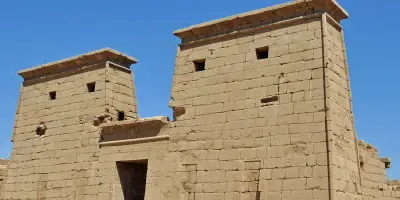
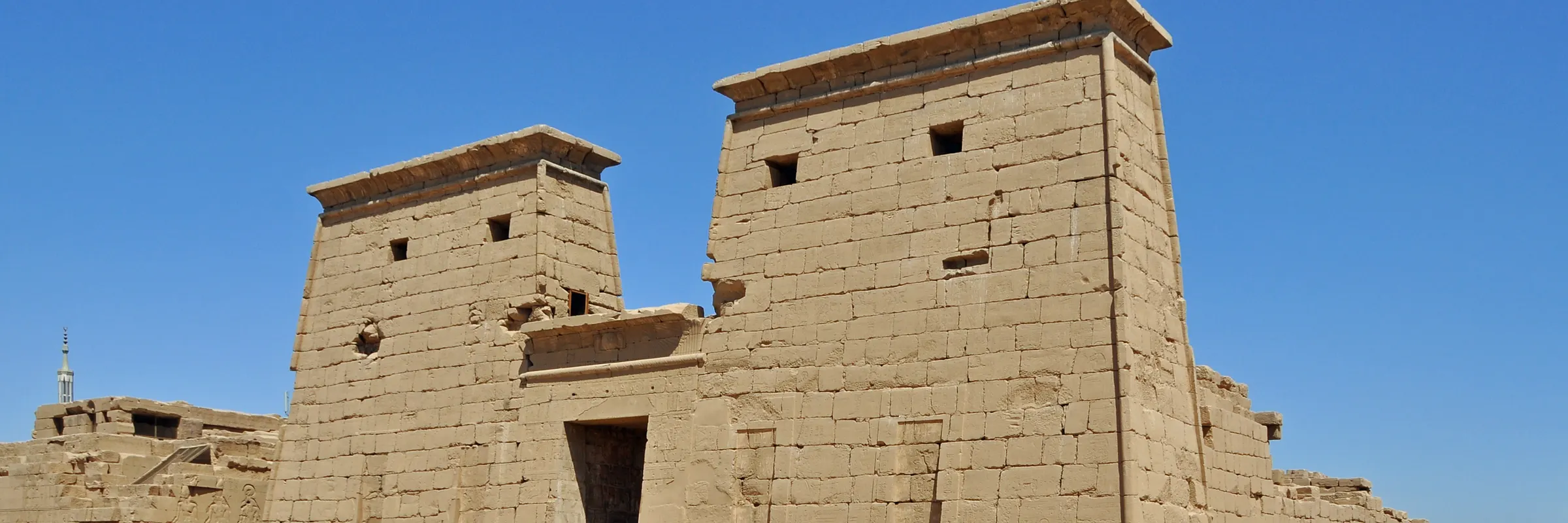
Luxor: the temple complex at Karnak
Photo: Marc Ryckaert ( MJJR ) · CC BY 3.0
Upper Egypt

Luxor: how many days you need and the best months to go

Luxor stands on the site of ancient Thebes and has been described as the world's greatest open-air museum, which for once is not marketing. The practical shape of a visit is set by the river: temples on the east bank, tombs on the west, and each side is a half-day that has to start early — because from May to September the heat here is genuinely dangerous rather than merely unpleasant.

Short answers

What people ask before booking

How many days do you need in Luxor?

Luxor needs two days — one for the east bank temples, one for the west bank tombs — and a third to go slower or fly a balloon at dawn. Every day here starts at sunrise, because the heat decides the schedule.

What is the best month to visit Luxor?

November to February — The season, and the reason everyone comes now. October and March — The edges of the season, with fewer people.

Which months are worth avoiding in Luxor?

May to September — Heat that is a safety matter, not a comfort one.

How many days Luxor needs

Two days is the working minimum: one for the east bank temples, one for the west bank tombs. A third lets you go slower, add a site most people skip, or take a balloon flight at dawn — which is the one activity here that genuinely earns its reputation.

Everything worth doing starts at sunrise. Not for the light, though that helps, but because by eleven in the summer the sites are punishing and by one they are close to unbearable. Building a day that ignores this is the single most common mistake made in Luxor.

How the place is arranged

The Nile splits Luxor into two halves with completely different jobs, and the ancient logic still governs the modern visit. The east bank was for the living and the west bank was for the dead, and four thousand years later that is still where you find the temples and the tombs respectively.

  • Karnak — an enormous temple complex on the east bank, built and rebuilt over roughly two thousand years. The hypostyle hall is the single most impressive interior space in Egypt. It is much bigger than photographs suggest and needs half a morning on its own.
  • Luxor Temple — in the middle of the modern town, connected to Karnak by an avenue of sphinxes. Smaller, and the one site here that is genuinely better after dark, when it is lit.
  • The Valley of the Kings — on the west bank, in a dry valley behind the cliffs. The tombs of the New Kingdom pharaohs, with painted walls that still hold their colour. A standard ticket covers a limited number of tombs; the famous ones are extra.
  • Deir el-Bahari — the terraced temple of Hatshepsut, built into the cliff face on the west bank. Architecturally the most striking thing in Luxor.
  • The Valley of the Queens and the Nobles' tombs — smaller, quieter, and in the case of the nobles' tombs, often better painted than the royal ones.

Where to stay, and which bank

Most visitors stay on the east bank, in the town itself, which is where the hotels, restaurants and the train station are. The west bank is quieter, more rural and closer to the tombs, and staying there changes the trip: you wake up among sugar cane fields rather than in a town.

The ferry between the two runs constantly and costs almost nothing, so neither choice cuts you off. The east bank is the practical choice for two nights; the west bank is the better one for three or more, especially if a balloon flight is in the plan, because the launch sites are over there.

AreaWho it suitsThe catch
East bank, town centreFirst visit. Restaurants, the train, the temples and the ferry all on foot.The busiest part for touts and calèche drivers, and the corniche can be relentless.
East bank, along the cornicheRiver views and the larger hotels with pools, which matter more here than usual.Spread out, so getting to town means a short taxi or a hot walk.
West bankQuiet, rural, close to the tombs and to the balloon launch sites.Fewer restaurants, and the ferry stops being frequent late at night.

Getting there, and getting around

Luxor has a small airport with mostly domestic and seasonal European flights, and the sleeper train from Cairo is a genuine option rather than a novelty: it leaves in the evening and arrives in the morning, saving a night's hotel. There are also regular day trains, which are slower and much cheaper.

Cairo is worth a stop on the way in or out, and more so than it used to be: the Grand Egyptian Museum near the pyramids opened fully in late 2025 and now holds the complete Tutankhamun collection — the objects that were found in the Valley of the Kings, an hour's drive from where you will be standing.

  • Agree taxi fares before getting in. There are no meters, and the price is negotiated. This is normal here and not a confrontation.
  • The ferry across the Nile is cheap and constant, and there is a separate, pricier boat for tourists. The local one is fine.
  • Hire a driver for a west bank day. The sites are spread across several kilometres of desert with no shade between them, and walking is not realistic.
  • Carry more water than you think you need, and a hat. The nearest shop to a tomb entrance may be a kilometre away.

The hassle, and how to handle it

Luxor has a reputation for persistent selling and it is earned. Calèche drivers, felucca captains, papyrus shops and self-appointed guides will approach you often, especially on the corniche and at site entrances. It is a livelihood in a town where tourism collapsed more than once in recent decades, and it is not personal.

The technique that works is uniform: a clear, friendly no, and keep walking without slowing down. Stopping to explain is read as interest. Do not accept anything handed to you as a gift — a scarf, a photograph, a small carving — because it will be followed by a request for payment.

  • Agree every price in advance, including a calèche ride, a boat trip and a photograph with a camel.
  • Official guides carry a licence. Someone offering to show you around inside a site without one is usually taking you to a shop.
  • Dress modestly — covered shoulders and knees. Upper Egypt is more conservative than Cairo, and it also keeps the sun off.
  • Tipping is expected in small amounts everywhere — for the person who opens a tomb gate, holds a door, or carries a bag. Carry small notes for this specifically.

How eating works here

Luxor is a small town and the food is simple, cheap and mostly vegetarian by default — beans, lentils, bread and salads, with grilled meat as the occasion dish. The hotel restaurants are safe and dull; the town's small places are better and cost a fraction.

The water rule matters more here than in Cairo. Drink bottled water, avoid ice in places that are not busy, and be careful with salads washed in tap water at quiet restaurants. Established places catering to visitors handle this properly as a matter of routine.

  • Alcohol is limited and mostly confined to hotels and a few licensed restaurants. This is not Cairo.
  • During Ramadan the rhythm changes completely — many places close during daylight and the town comes alive after sunset. The dates move by about eleven days each year.
  • Lunch is the main meal and the day slows down around it, which fits the heat perfectly.
  • Bread is the utensil, and eating with the right hand is normal in traditional places.

Where to eat in Luxor, dish by dish

Luxor is not a food destination and the food is genuinely good anyway, because Egyptian everyday cooking is cheap, filling and largely vegetarian. Skip the hotel buffets and eat in town. What follows is what to order rather than where — in a town this size, the dish is more useful than the address.

  • Bazaar

    Market

    The market, and what to actually buy there

    The covered souq behind the temple sells spices, dates, karkadeh hibiscus and a great deal aimed at visitors. Prices are negotiated and the first number is not the price. Buy dried hibiscus and spices; be sceptical of anything sold as papyrus, which is usually banana leaf.

    Check it on Wikidata
  • Koshary

    What to order

    The national dish, which costs almost nothing

    Rice, macaroni, lentils and chickpeas under fried onion, tomato sauce and a garlic-vinegar mixture you add yourself. Entirely vegan by construction, filling, and the cheapest proper meal in Egypt. Dedicated shops do nothing else and serve it in under a minute.

    Check it on Wikidata
  • Ful medames

    What to order

    Breakfast before a sunrise start

    Slow-cooked fava beans with oil, cumin and lemon, scooped up with flatbread. This is what the country eats in the morning and it is exactly the right thing before a five o'clock departure for the west bank. Sold from carts and hole-in-the-wall counters from very early.

    Check it on Wikidata
  • Ta'amiya

    What to order

    The falafel, which is not made of chickpeas here

    Egyptian falafel is made with fava beans rather than chickpeas, which makes it greener inside and softer than the Levantine version. Fried to order and eaten in bread with salad and tahini. It is a different food from what the same word means elsewhere, and worth trying on those grounds alone.

    Check it on Wikidata
  • Hamam mahshi

    What to order

    The Upper Egyptian dish you will not find at home

    Pigeon stuffed with spiced rice or cracked wheat and roasted, a speciality of rural Egypt and common in Luxor. There is more bone than meat and eating it is a slow, hands-on business. It is a proper local dish rather than a tourist one, which is exactly why it is on this list.

    Check it on Wikidata

When to go, and what each month costs you

Luxor's calendar is not a matter of preference. The summer here is one of the hottest inhabited places on earth, and between roughly May and September the middle of the day is not spent outdoors by anyone with a choice. The winter, by contrast, is close to perfect.

  • November to February

    Go now

    The season, and the reason everyone comes now

    Warm days, cool nights, clear dry air and sites that can be walked at midday without difficulty. This is peak season and prices reflect it. December and January nights are genuinely cold, which surprises people who packed only for the desert.

  • October and March

    Go now

    The edges of the season, with fewer people

    Hot but manageable, especially in the mornings, and noticeably quieter and cheaper than the peak. Good compromises if you can start early and rest in the afternoon.

  • April

    Worth it, but

    The heat arriving, and it arrives fast

    Comfortable at the start and difficult by the end. Sightseeing works if you finish by midday. This is also when the khamaseen winds can blow dust from the desert, which occasionally grounds balloon flights and makes the air hazy.

  • May to September

    Think twice

    Heat that is a safety matter, not a comfort one

    This is among the hottest inhabited regions on the planet, and the middle of the day in the Valley of the Kings — a stone valley with no shade — is genuinely dangerous. Tours start before dawn and stop by late morning for a reason. Prices are at their lowest and that is the reason.

  • Ramadan (it moves each year)

    Worth it, but

    A different town, and worth knowing about first

    During the fasting month many restaurants close during daylight and the pace shifts to the evening. It can be a remarkable time to visit. The dates move by around eleven days a year, so they need checking against your own rather than assuming a season.

Things that change the trip

  • Start at sunrise, every day. By late morning in the warm months the sites stop being enjoyable and start being a health question.
  • One bank per day. East for the temples, west for the tombs, and the ferry between them is cheap and constant.
  • Hire a driver for the west bank. The sites are kilometres apart across open desert with no shade in between.
  • Agree every price before you accept anything — a taxi, a calèche, a boat, a photograph. It is the local norm and not a confrontation.
  • Carry far more water than feels necessary, plus a hat and small notes for tips.
  • Stop in Cairo for the Grand Egyptian Museum if the routing allows. It opened fully in late 2025 and holds the complete Tutankhamun collection — found in the valley you will be standing in.

Plan Luxor around the sunrise and the two banks

A trip of more than three days, or one that adds Aswan or Cairo and the trains between them, is what Premium is for. The free version covers one destination of up to three days.

Destinations