
Skip to content
JoruJoru
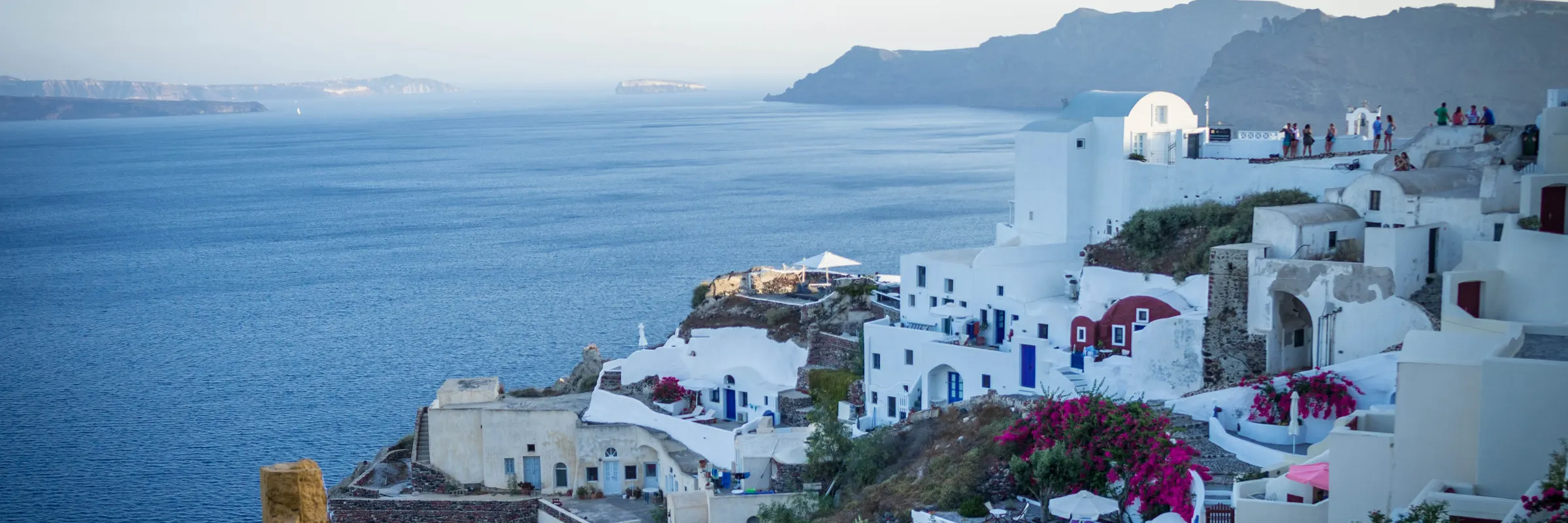
Santorini: The white houses of Oia above the caldera

Cyclades, Greece

Santorini: how many days you need and the best months to go

Photo: Michelle Maria · CC BY 3.0

Santorini is what remains of a volcano. About three and a half thousand years ago an eruption blew out its centre, and the sea poured in to fill a caldera ringed by cliffs some three hundred metres high. On the rim, the white villages of Fira, Imerovigli and Oia hang over the drop with their blue domes and cave houses, facing the sunset across the water and the black islands of the new volcano in the middle. The rest of the island slopes gently down to beaches of black sand, vineyards of vines coiled into low baskets against the wind, and the excavated Bronze Age town of Akrotiri, buried in ash by the same eruption. The planning problem is that everyone comes for the same view. The caldera villages are small, steep and among the most expensive places to sleep in Greece, cruise ships send thousands of passengers up the cliff on busy days, and the sunset at Oia draws a crowd every evening of the season. Where you sleep, and at what hours you go out, decide what kind of trip it is.

Short answers

What people ask before booking

How many days do you need in Santorini?

Santorini needs three days: one for the caldera, with the walk along the rim from Fira to Oia and the sunset; one for a boat to the volcano; and one for the Bronze Age town of Akrotiri, a winery and a black-sand beach. A fourth day slows it down, or adds a ferry to another island.

What is the best month to visit Santorini?

May and June — Warm and bright, before the peak. September and October — A warm sea and softer light.

Work out how many hours you will have in Santorini on your dates
When to go, and what each month costs you

Santorini has a dry Mediterranean climate: hot, windy summers with almost no rain, and mild, wet and windy winters. The season runs from spring to autumn, and in winter much of the island closes.

  1. January: Worth it, but
  2. February: Worth it, but
  3. March: Worth it, but
  4. April: Worth it, but
  5. May: Go now
  6. June: Go now
  7. July: Worth it, but
  8. August: Worth it, but
  9. September: Go now
  10. October: Go now
  11. November: Worth it, but
  12. December: Worth it, but
  • May and June

    Go now

    Warm and bright, before the peak

    Warm, sunny days and long evenings, with the island open and not yet full. The sea is still cool in May and warms through June; from late June the summer crowds arrive.

  • September and October

    Go now

    A warm sea and softer light

    The sea still warm after the summer, the heat and the wind easing, and fewer people. October is quieter still, with some places starting to close towards the end of the month.

  • July and August

    Worth it, but

    Hot, windy and full

    Hot, cloudless days with the strong north wind of the Aegean summer, which cools the island and roughens the sea. The crowds, the cruise ships and the prices are at their peak; book well ahead.

  • April and November

    Worth it, but

    The edges of the season

    Mild days and cool nights, with the sea too cold for most swimmers. Hotels and restaurants are opening in April and closing in November, and prices are low. Greek Easter, whose date moves between April and early May, fills the island for a weekend.

  • December to March

    Worth it, but

    Closed, windy and quiet

    Cool, windy weather with rain, and an island mostly closed: few hotels and restaurants open, and fewer ferries. The caldera without crowds, for those who only want the view and the walks.

What to pack for Santorini, month by month

How many days Santorini needs

Three days see the island without rushing. One for the caldera: the walk along the rim from Fira to Oia, a swim, and the sunset. One for the sea: a boat across the caldera to the volcano and its warm springs. One for the south: the Bronze Age town of Akrotiri, a winery and a black-sand beach.

A fourth day slows it down: the ancient city on the mountain above Kamari, the inland villages of Pyrgos and Megalochori, or a lazy day on a beach. Santorini also combines well with a ferry to Naxos, Paros, Ios or Crete.

How the island is arranged, around a flooded crater

Santorini is a crescent around the caldera. The west side is the rim: cliffs dropping into the sea, with the villages along the top; the east side slopes gently down to the airport, the beaches and the farmland. The ferry port of Athinios sits at the foot of the cliffs south of Fira.

  • Fira — the capital on the cliff edge, with the bus station, the museums, the cable car down to the old port, and the nightlife.
  • Firostefani and Imerovigli — the villages along the rim north of Fira, quieter, with the widest caldera views and the rock of Skaros.
  • Oia — the village at the northern tip, famous for its sunset, with the little harbour of Ammoudi below.
  • Kamari and Perissa — the black-sand beach resorts of the east coast, on either side of the mountain with the ancient city.
  • The south and the interior — the excavations of Akrotiri, the wine villages of Pyrgos and Megalochori, and the lighthouse at the island's tip.

Where to stay, and what each area costs you

A room on the caldera is the classic Santorini: a terrace over the drop, the sunset from your door, and the steps and the prices to match. The beach resorts are cheaper and flat, with the caldera a bus or car ride away; the inland villages are in between.

Prices peak in July and August and are high from May to October; from November to March many hotels and restaurants close. Greece charges a climate fee per room and per night, higher in the summer season.

AreaWho it suitsThe catch
FiraShort stays without a car: the bus station, the restaurants, the nightlife and caldera views.Crowded by day with cruise passengers, and noisy at night.
Firostefani and ImerovigliThe view: cave hotels on the rim, quieter than Fira and within walking distance of it.Among the dearest rooms in Greece, with many steps and no beach.
OiaThe famous village and its sunset on the doorstep, at its best in the early morning and late at night.Very expensive, crowded every evening, and far from the beaches and the south.
Kamari and PerissaBeaches, lower prices and flat streets, with buses to Fira.No view of the caldera, and the black sand gets very hot.
Pyrgos and the inland villagesQuiet traditional villages among the vineyards, central for a car.No caldera view from most rooms, and you need a car.

Compare these areas against your priorities

Getting there, and getting around

Santorini's airport is a few kilometres from Fira, with flights from Athens all year and from much of Europe in summer. Ferries come from Piraeus, the port of Athens, in about five hours by fast boat or eight by conventional ferry, and link the island with the other Cyclades and with Crete; they arrive at Athinios, below the cliffs, where buses and taxis wait.

The buses all start from Fira and reach the villages, the beaches, the airport and the port; they are cheap, and crowded in summer. A hire car gives freedom, but the roads are narrow and parking in the caldera villages is scarce.

  • The old port below Fira is reached by cable car or by a stairway of hundreds of steps; the donkeys that work the stairs are a welfare concern.
  • Check the cruise calendar: on days with several ships in the caldera, Fira and Oia fill from mid-morning.
  • Quad bikes are popular and accident-prone; a small car is safer.
  • Taxis are few: book the transfer to the port or the airport ahead in summer.

The caldera, the volcano and Akrotiri

The walk along the rim from Fira to Oia is the best way to see the caldera: three to four hours on a path that climbs and drops between the villages, with the sea three hundred metres below. Start early in summer, carry water, and check which stretches are open. The island is still volcanic: the islands in the middle of the caldera last erupted in 1950, and in early 2025 a long swarm of earthquakes off its coast sent thousands of people away for weeks.

  • Akrotiri — a Bronze Age town buried in ash by the great eruption, excavated under a roof, with streets and houses still standing two storeys high.
  • The volcano — boats cross the caldera to the black lava of Nea Kameni and to the warm springs off Palea Kameni.
  • Oia at sunset — the island's ritual, with crowds on every wall; arrive early, or watch it from somewhere quieter along the rim.
  • Ancient Thera — the ruins of a Greek and Roman town on the ridge above Kamari, with views over both coasts.
  • The beaches — black sand at Kamari and Perissa, white cliffs of pumice at Vlychada; the famous Red Beach is closed to visitors because of rockfalls.
  • The Museum of Prehistoric Thera — in Fira, with the frescoes and finds of Akrotiri.

How eating works here

Santorini's volcanic soil and lack of water give it small, intensely flavoured produce: tiny tomatoes, a small yellow pulse, white aubergines and capers, and wines from vines coiled into baskets against the wind. The caldera restaurants sell the view; the villages and the beaches have the better value.

Greek hours apply: lunch from one or two, dinner late, from eight or nine. Book a table for sunset if you want one with the view.

  • Wineries across the island offer tastings, many with views over the caldera.
  • Fish is sold by weight: check the price before ordering.
  • Drink bottled water: the island's tap water comes from desalination and is not for drinking.
  • Tipping is customary but small: round up, or leave a little in restaurants.

Where to eat in Santorini, and what to order

Santorini cooks with what grows in volcanic ash without water: a purée of the island's small yellow pulse, fritters of its tiny tomatoes, and two wines from the same old vines, one dry and mineral, one sweet from sun-dried grapes.

  • Fava Santorinis

    What to order

    The yellow purée of the island

    A smooth purée of a small yellow pulse grown on the island, a relative of the sweet pea rather than the split pea used elsewhere in Greece, served warm or at room temperature with olive oil, raw onion and capers. Santorini's version has a protected name, and it is on every menu.

    Check it on Wikidata
  • Tomatokeftedes

    What to order

    Tomato fritters

    Fritters of the island's small, sweet tomatoes mixed with onion, mint and flour, fried until crisp. The tomatoes grow without irrigation in the volcanic soil, which concentrates their flavour; the fritters are the classic starter.

    Check it on Wikidata
  • Assyrtiko

    What to order

    The white wine of the volcano

    A dry, mineral white wine with high acidity, from the Assyrtiko grape grown on vines coiled into low baskets that shield the grapes from the wind. It is the island's great wine, and goes with everything from fish to fava.

    Check it on Wikidata
  • Vinsanto

    What to order

    The sweet wine of sun-dried grapes

    A sweet amber wine from grapes dried in the sun before pressing, then aged for years in barrels. It has been made on the island for centuries; drink a small glass with dessert, or at the end of a winery visit.

    Check it on Wikidata

Things that change the trip

  1. Choose where to sleep first: the caldera for the view, the beaches for the price.
  2. Walk the rim from Fira to Oia early in the morning, with water.
  3. Check the cruise calendar and visit Fira and Oia early or late on busy days.
  4. Book the sunset table, or watch the sunset away from Oia.
  5. Take the cable car or walk the steps rather than ride a donkey.
  6. Drink bottled water, and visit a winery for the Assyrtiko and the Vinsanto.

Plan Santorini with the Cyclades

A trip of more than three days, or one that joins Santorini with Athens, Naxos, Paros, Milos or Crete and the ferries between them, is what Premium is for. The free version covers one destination of up to three days.

Destinations